How to Light Stairs: A Complete Guide to Safe, Stylish Staircase Lighting
Staircases are more than a way to move between floors—they can be a defining architectural feature. The right lighting can improve safety, highlight the design, and create a warm, inviting atmosphere. From recessed step lights and wall sconces to concealed LED strips and smart controls, there are many ways to illuminate a staircase. The key is balancing visibility, comfort, energy efficiency, and aesthetics.
Why Is Stair Lighting Important?
Stair lighting serves two important purposes: safety and design.
Adequate illumination helps users clearly see each step, reducing the risk of trips and falls—especially in stairwells with limited natural light. At the same time, strategically placed lighting can emphasize the architecture, materials, and shape of the staircase.
Well-designed stair lighting should:
- Clearly illuminate each step.
- Minimize glare and harsh shadows.
- Complement the architecture and interior design.
- Provide comfortable nighttime illumination.
- Use energy-efficient LED technology.
- Integrate with dimming, motion sensors, or smart controls.
Staircase Lighting Ideas
There is no single solution for every staircase. The best approach depends on the design, available space, ceiling height, and desired aesthetic.
1. Spotlights and Recessed Step Lights
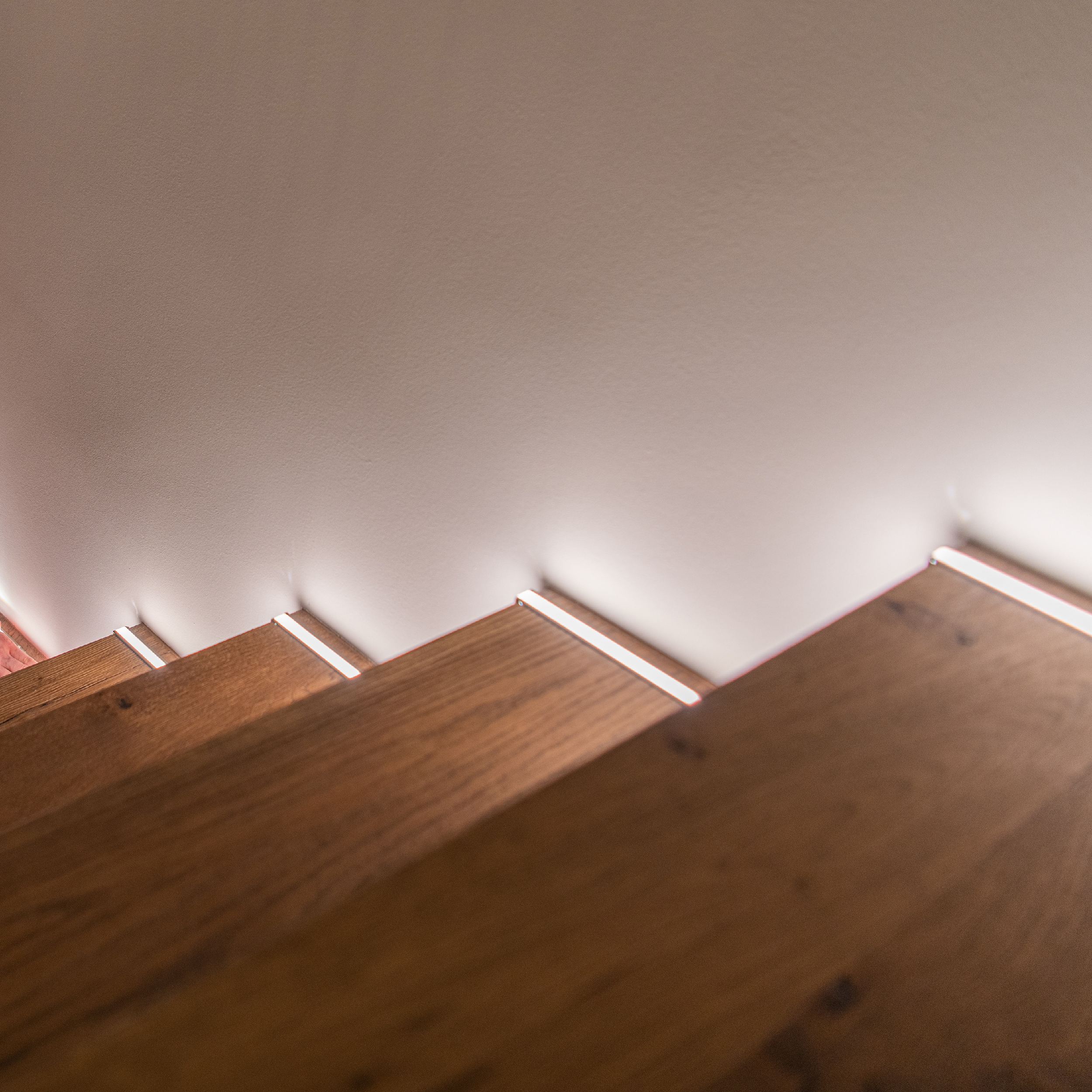
Spotlights and recessed fixtures like our HR-SLIM-KOZ can provide focused illumination along a staircase. They can be installed in walls, risers, or other strategic locations to illuminate individual steps.
For a clean architectural look, recessed lighting can blend into the surrounding surface while keeping the staircase as the focal point.
2. Pendant Lights and Chandeliers
High ceilings and open stairwells provide an opportunity to make lighting a major design feature.
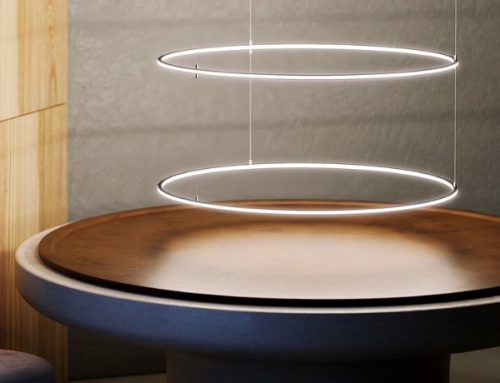
Pendant fixtures like our GIZA-LL can create a dramatic focal point while providing ambient illumination. However, combining them with low-level or concealed LED lighting can provide both visual impact and practical illumination.
3. Wall Sconces
Wall sconces are a classic staircase lighting solution. They can provide direct or indirect illumination while adding a decorative element to the space. Sconces can be positioned along the stairwell to create a consistent rhythm of light. For modern interiors, minimalist fixtures can complement contemporary architecture, while decorative designs work well in traditional spaces.
4. Ceiling Lighting
Ceiling-mounted fixtures like our MICRO-ALU provide broad, general illumination and work well in stairwells and hallways. Recessed downlights, surface-mounted fixtures, and architectural ceiling systems can illuminate the overall space while working alongside dedicated step lighting. Combining overhead lighting with lower-level illumination can also help minimize shadows.
5. LED Strip Lighting
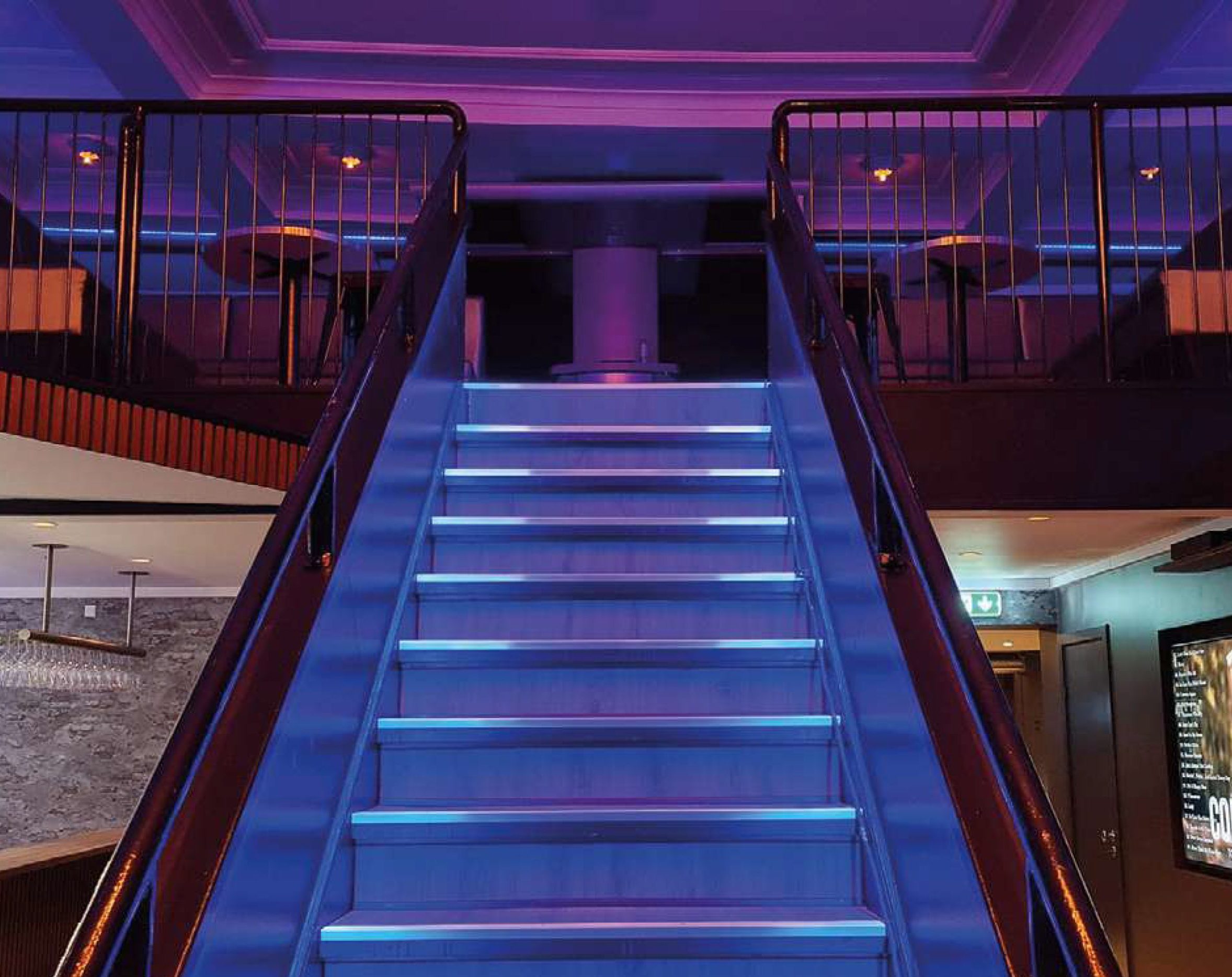
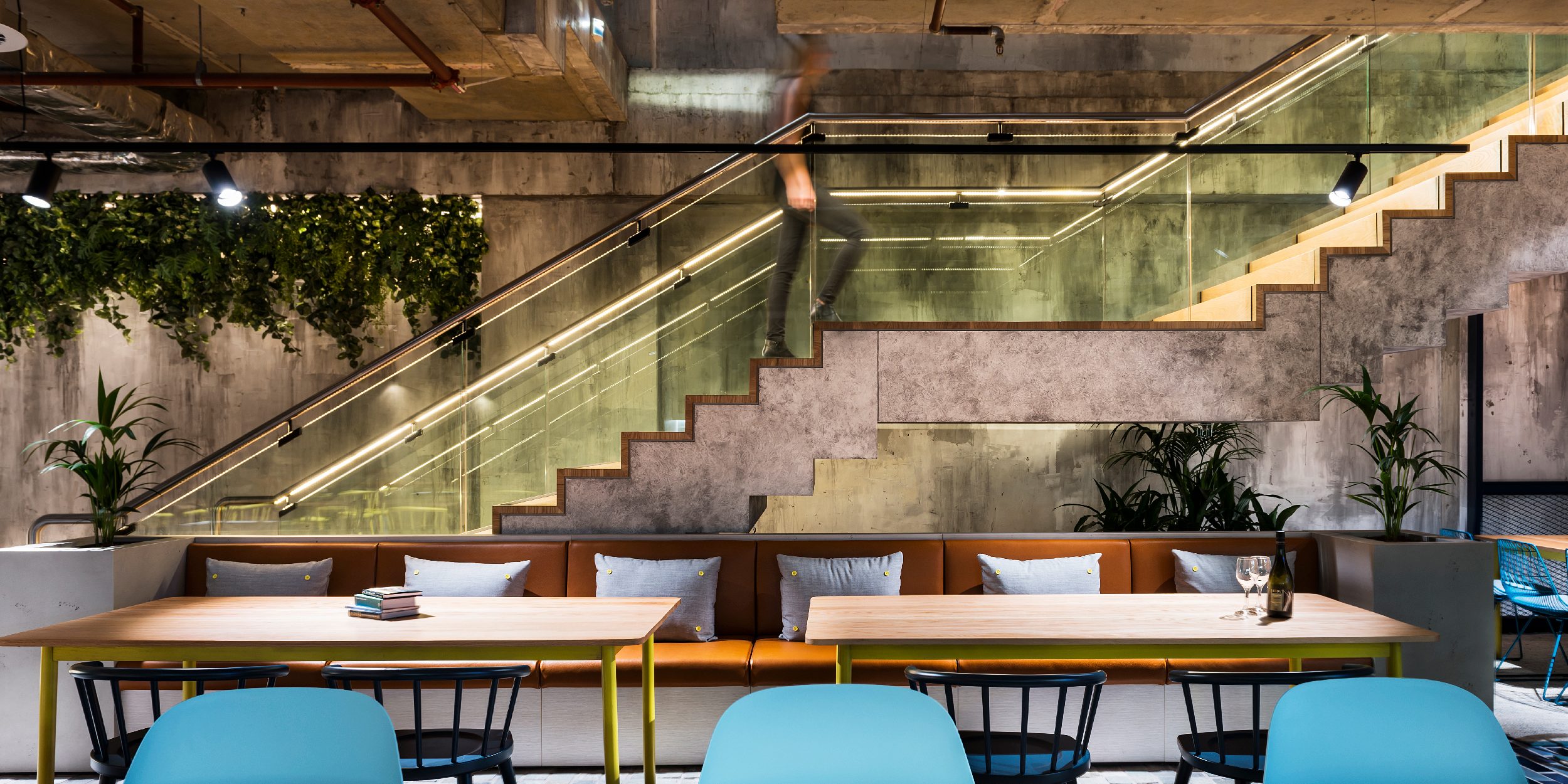
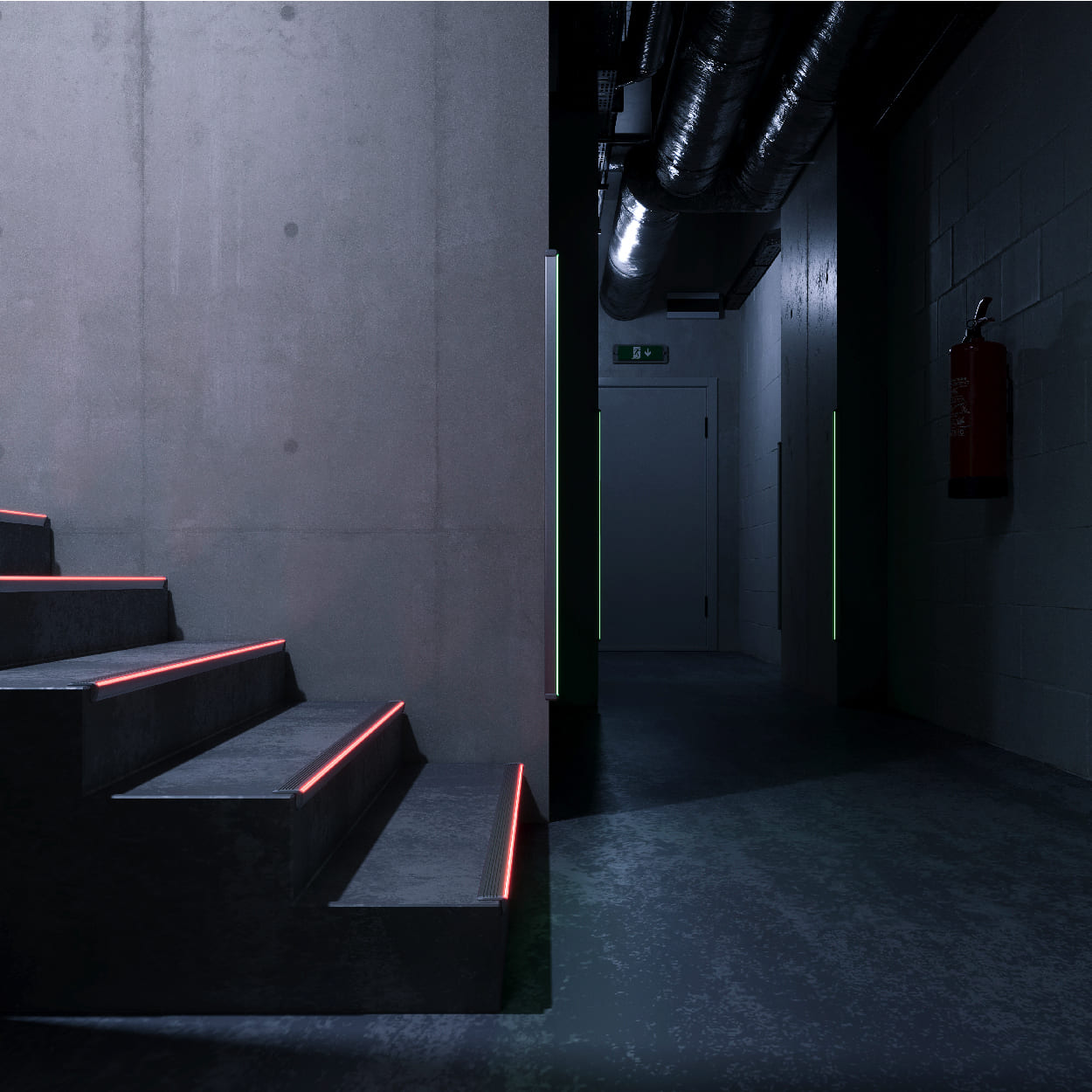
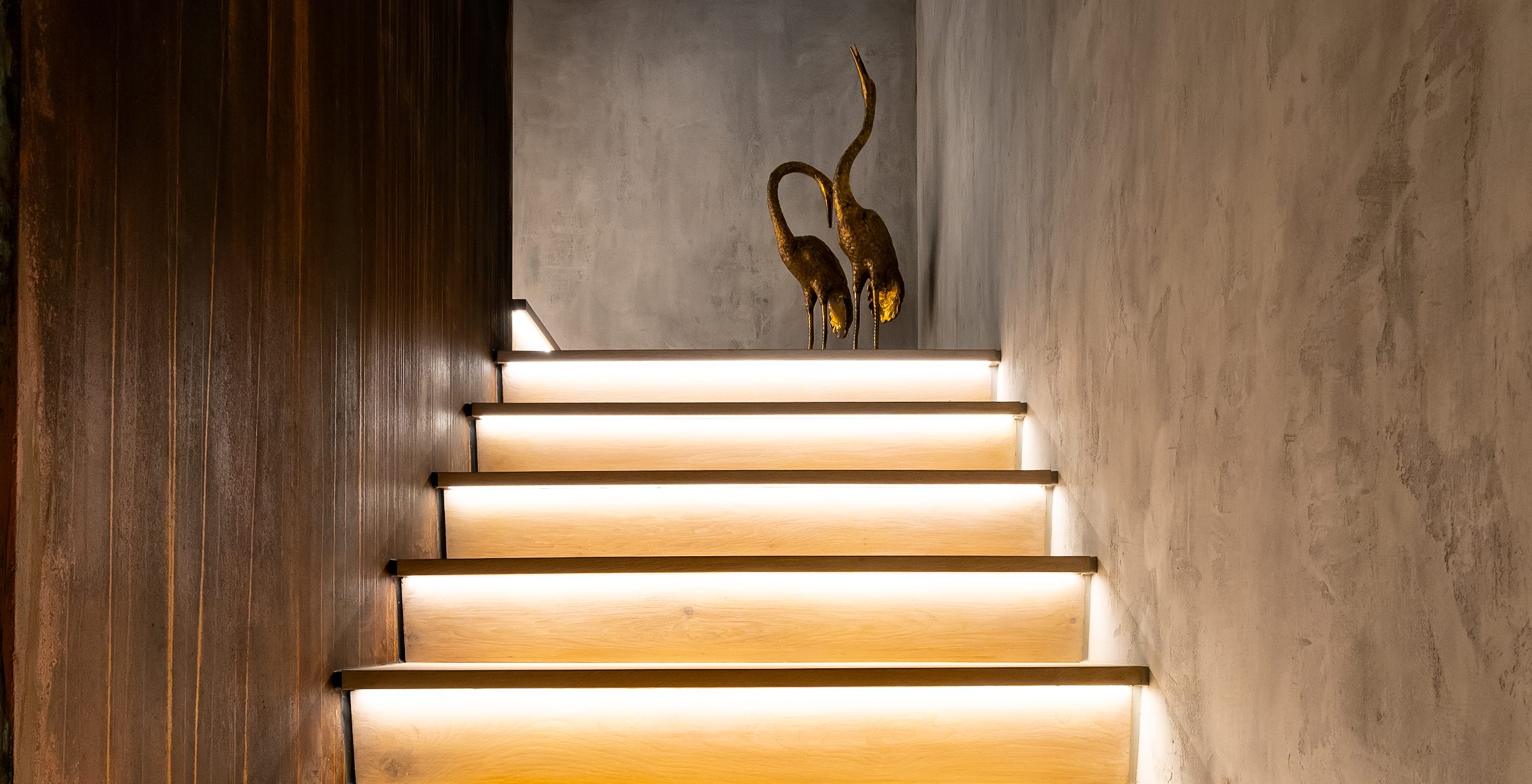
For modern staircases, LED strip lighting offers one of the most flexible ways to create functional and architectural illumination. LED strips can be integrated beneath stair treads, along risers, beneath handrails, or within architectural profiles. When properly concealed, the light source can remain virtually invisible while producing a clean, continuous glow (See MICRO-PLUS application below).
LED strips also offer flexibility in:
- Color temperature: Warm, neutral, or cool white.
- Brightness: Adjustable with compatible dimming systems.
- Length: Cut to fit specific applications.
- Color: RGB and RGBW options.
- Installation: Surface-mounted, recessed, or integrated into profiles.
- Control: Compatible with sensors, dimmers, and smart systems.
Aluminum LED profiles can provide a clean finished appearance
while helping protect and diffuse the LED strip.
How to Light Stairs with LED Strip Technology
LED strip lighting allows designers to create layered, low-level illumination throughout a staircase.
LED strips can be installed:
- Under stair treads.
- Along staircase sides.
- Under handrails.
- Along adjacent walls.
- Inside recessed architectural profiles.
- Along the edges of floating stairs.
The result is controlled illumination that highlights the architecture while providing light exactly where it is needed.
Choosing the Right Color Temperature
Color temperature plays an important role in the atmosphere of a staircase.
Warm White — 2700K–3000K
Creates a comfortable, welcoming atmosphere ideal for residential and hospitality environments.
Neutral White — 3500K–4000K
Provides balanced illumination for contemporary residential and commercial spaces.
Cool White — 5000K+
Creates a crisp, energetic appearance suitable for certain commercial and task-oriented applications.
For many residential staircases, warmer color temperatures provide comfortable visibility without making the space feel overly bright.
Add Smart Controls and Motion Sensors
Combining LED lighting with motion sensors and smart controls can make staircase lighting more efficient and convenient. Sensors can activate the lights when someone approaches and automatically dim or turn them off after use.
Benefits include:
- Reduced energy consumption.
- Illumination only when needed.
- Lower nighttime brightness.
- A modern, automated experience.
- Dynamic “follow-the-step” lighting effects.
How to Avoid Glare
Glare is an important consideration when designing stair lighting. Because stairs are viewed from multiple angles, exposed LEDs can become uncomfortable or distracting.
To reduce glare:
- Conceal LED strips within aluminum profiles.
- Use diffusers to soften the light source.
- Direct light toward the steps rather than toward the viewer.
- Avoid high-output LEDs at eye level.
- Use dimming to adjust brightness.
- Test the lighting from both the top and bottom of the staircase.
The goal is to make the light visible without making the LED source the focus.
Designing a Layered Stair Lighting System
The most effective staircase lighting designs often combine multiple layers:
Ambient Lighting
Ceiling fixtures or architectural lighting provide general illumination.
Step Lighting
LED strips or recessed fixtures illuminate individual steps.
Accent Lighting
Architectural LED lighting highlights walls, handrails, and materials.
Decorative Lighting
Pendant fixtures or chandeliers add visual interest.
Smart Controls
Dimmers and sensors allow the system to respond
automatically to occupancy and time of day.
This layered approach creates a staircase that is both functional and visually integrated with the surrounding architecture.
Final Thoughts: How to Light Stairs
The best stair lighting combines safety, visual comfort, energy efficiency, and design.
Start by identifying where illumination is needed, then determine whether recessed fixtures, wall lighting, LED strips, or a combination will provide the best result. Consider color temperature, glare control, LED output, profiles, and controls as part of the overall design.
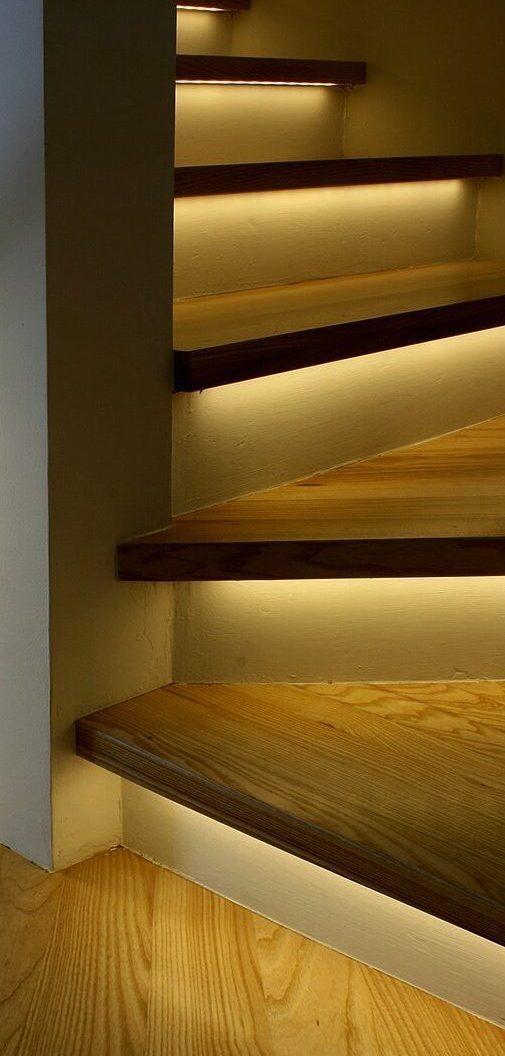
For a modern and highly customizable approach, LED strip lighting provides the flexibility to illuminate individual steps, highlight architectural details, and integrate smart controls into a cohesive lighting system.
With the right combination of LED technology, profiles, diffusion, and controls, stair lighting can do more than improve visibility—it can make the staircase an integral part of the architecture.